Below you’ll find some personal stories written by our amazing peer support workers!
Traumatic Brain Injury (TBI)
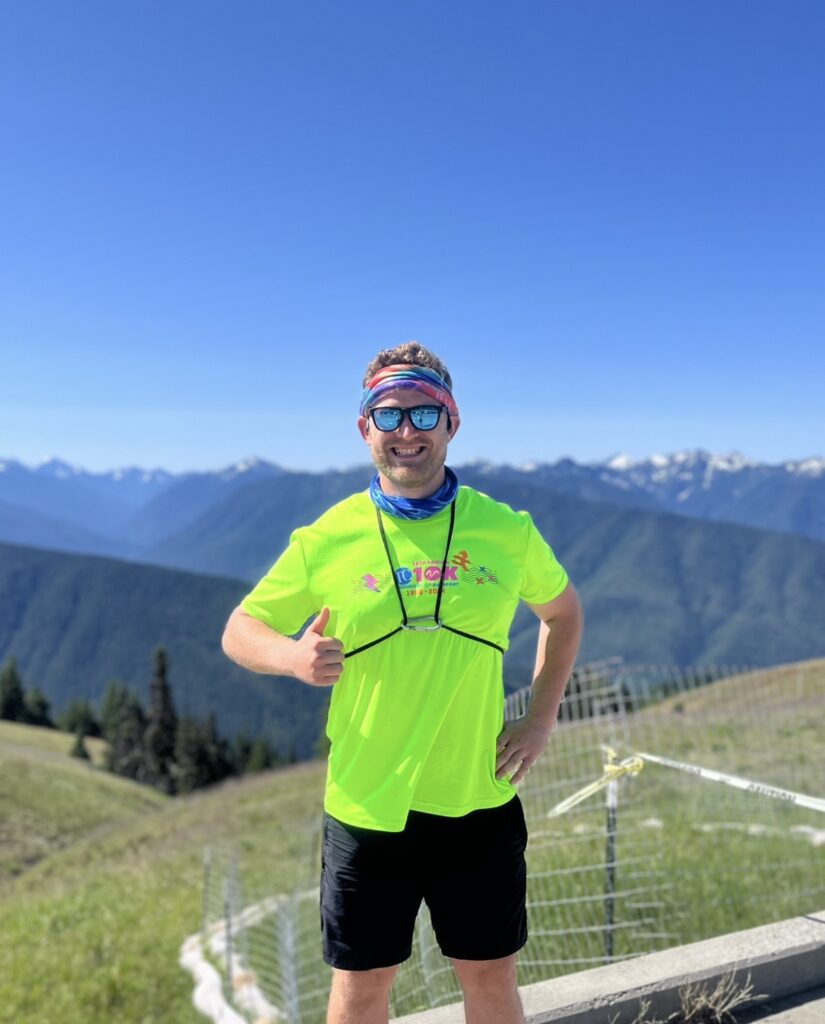
Bryan
1. Type of Injury
In the early morning hours of April 1st, 2018, my life changed completely. I sustained a traumatic brain injury that resulted in hematomas and brain bleeds in two areas of my brain. The injury happened when I was assaulted outside a pub in Victoria, struck unexpectedly, and fell backward onto the pavement. The impact caused my brain to ricochet within my skull.
I was rushed to the hospital, placed in a medically induced coma, and intubated. My family, who lived in Ontario, received the call that I had been attacked and was in critical condition. They immediately flew across the country to be by my side. After several days in the ICU, I was transferred to the brain injury unit at the hospital. They later discharged me with the plan to move back in with my parents, who moved here to BC following my brain injury.
2. Impact on My Life and Change of Trajectory
At the time, I was 28 years old, working full-time and in the middle of my master’s program. I was ambitious and driven, with plans to develop meaningful projects supporting children with autism. That all came to a halt after the injury.
I took one semester off school and, through perseverance and the invaluable support of my incredible supervisor and human being, Dr. Kimberly Speers, I managed to complete my master’s degree. Still, I wasn’t able to return to work for three years and forced me to stay living with my parents for 3 years, both a humbling and challenging transition after having built a life of independence.
The injury didn’t just interrupt my career; it changed my life trajectory completely. It also came shortly after the end of a marriage, so I was facing both emotional and physical recovery at once. My family was deeply concerned; my friends and community rallied around me, offering encouragement, financial help, and gestures of support. My brother started a GoFundMe campaign, which raised over $10,000, and my local fitness group dedicated an exercise session in my honor. That outpouring of kindness gave me strength, but it was still an incredibly isolating time once the initial attention faded and I was left to rebuild.
3. What Was Challenging
The challenges were vast: physical, emotional, and existential. I lost my sense of smell and taste, permanently. My emotional regulation was drastically affected; I went from rarely crying to feeling waves of uncontrollable emotion.
There was a deep grief in realizing how much my injury impacted not only me but those around me. Over time, it became harder when life “went back to normal” for others, while mine felt paused. I wanted so badly to move forward but felt stuck between potential and limitation.
I also wrestled with guilt, anger, and loss, toward myself and others. I had always been someone who gave 110% to everything, and it was painful to accept that effort alone couldn’t restore what was lost.
4. What Was Personally Helpful / Where I Found Comfort
My recovery was supported by an incredible team of therapists at Adanac Therapy Services; including a speech pathologist, occupational therapist, counsellor, social worker, and neuropsychologist. I gave everything I had to recovery, showing up with notes, ready to learn and grow.
Comfort also came from self-reflection and reconnection. I revisited my past, reconciled with my inner child, and learned to embrace imperfection, in myself and others. I realized that healing wasn’t linear, and that forgiveness and compassion were as essential as discipline and therapy.
Later in my recovery, I heard about a young woman at UVic who sustained a similar injury from a scooter accident but never regained full function. That story changed me. It made me see how fortunate I was to be alive and mobile, and I’ve carried that awareness with me; even crying at marathon finish lines, knowing how lucky I am to still be able to run.
My parents were my foundation. Without their unwavering support, I might have ended up in a group home or forced to leave my community in Victoria. They made it possible for me to stay, rebuild, and find my place again.
I also found joy again through Laughter Yoga training and learning to laugh unconditionally helped me reconnect with a part of myself that had been quiet for too long.
5. What Community Resources Were Helpful
The Royal Jubilee Hospital and Adonac Therapy Services provided essential early rehabilitation. Later, the Victoria Native Friendship Centre became a pivotal part of my return to community. When I volunteered there, one of the staff; a kind woman navigating her own journey of recovery, saw my potential and advocated for me to be hired during COVID’s second lockdown. That position became my first job after my brain injury and helped me rebuild both confidence and purpose.
These community connections reminded me that recovery doesn’t happen in isolation. My healing was as much about rejoining the world as it was about retraining my brain.
6. What Has Receiving Peer Support Done for Me
Peer support has been transformative — both receiving it and giving it. Early on, I attended peer groups through VBIS, where I found a sense of belonging and understanding. But over time, I realized I wanted to give back. That realization led me to work at The Cridge Centre for the Family, supporting other brain injury survivors in their own recovery.
Being on the other side of peer support, as the helper, not just the helped, has given me immense purpose. It allows me to channel my own experiences into something meaningful and reminds me that survival isn’t just about staying alive; it’s about helping others find life again too.
Closing Reflection
If I had to sum up my story, I’d say this: My brain injury broke me open, but in doing so, it revealed deeper layers of compassion, purpose, and gratitude. I learned that healing doesn’t mean returning to who you were; but rather, it means learning to love who you’ve become.
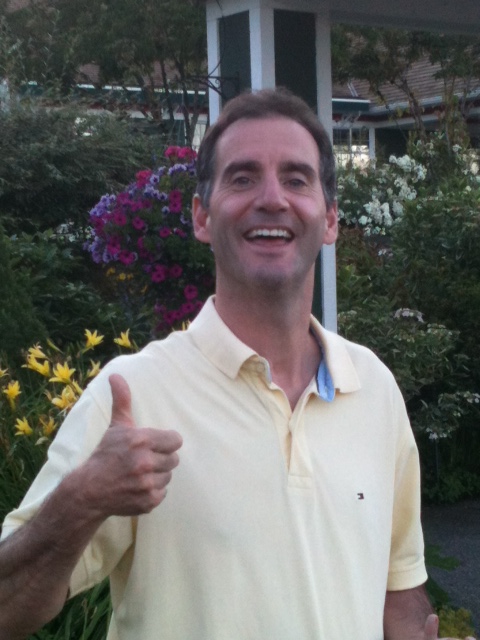
Michael
On May 18, 2006, life changed forever for Michael. While driving to Kelowna with his former spouse and seven-month-old twins, a tragic accident on the Coquihalla Highway left Michael with a severe traumatic brain injury. His van rolled more than once, and though the airbags deployed and his seatbelt likely saved his life, he was left unresponsive. He was airlifted to Royal Inlands Hospital in Kamloops and later transferred to Royal Columbian Hospital to be closer to family. For six and a half months, Michael remained in a coma, and doctors warned his loved ones that his chances of recovery were slim. His wife, Ann, was faced with raising their two infants alone, and the family was advised to seek long-term care for him.
Refusing to give up hope, Michael’s family explored alternative treatments and discovered Hyperbaric Oxygen Therapy (HBOT). His mother accompanied him daily into the chamber at a clinic in Richmond. After the third session, a miracle began—Michael showed his first signs of recovery. From that moment, a new chapter began—one defined by determination, faith, and relentless effort.
Michael began rehabilitation using the Lokomat Machine at NeuroMotion in Vancouver under the guidance of Pauline Martin. Through countless sessions, he progressed from a power wheelchair to a manual one, and eventually to walking with a cane. Today, he is nearly walking independently—an incredible testament to resilience and the human spirit.
The impact of Michael’s injury reshaped every aspect of his life. What had once been a routine business trip became the starting point of an entirely new journey—one of recovery, advocacy, and inspiration. His family and friends became his unwavering support network, while the broader community rallied behind his story of perseverance. The challenges were immense: relearning to move, speak, and live with independence. Yet, comfort came from love, faith, and a newfound purpose—to help others walking similar paths.
Community programs also played an important role in Michael’s recovery. In 2007, inspired by Rick Hansen’s “Wheels in Motion” events, Michael joined the cause to give back. Despite still being in rehabilitation, he organized a fundraising team of friends, family, and former colleagues from Molson Coors, raising over $22,000 and setting a national record.
Receiving peer support and connecting with others who have faced similar struggles has given Michael renewed strength and perspective. Through these connections, he found understanding, encouragement, and the reassurance that recovery is possible. Today, as a recipient of the 2012 Courage to Come Back Award for Physical Rehabilitation and author of The Courage to Come Back: Triumph Over TBI – A Story of Hope, Michael continues to inspire others with his resilience. Living in a group home near his family, he remains focused on his long-term goal: to be an active and loving participant in his family’s life—a goal that symbolizes not just survival, but triumph over unimaginable odds.

Chris
Hello, my name is Chris. I have been asked to share my brain injury story and so here it is.
My injury happened September 7, 2016. Would you believe I sustained a severe brain injury doing what billions of individuals do every day, most of their lives? I fell walking on the sidewalk. I hit my head so hard it resulted in a life-changing event. Below is a list of some things about my journey through brain injury.
- My Injuries include aphasia, a seizure disorder, hydrocephalus (water on the brain), reduced vision and paralysis of my right arm. and limited use of right hand.
- I spent over a year in the hospital
- Living arrangement has been with parents since release from hospital
- Parents are a constant source of support and optimism.
- I have younger siblings, 1 brother, 2 sisters
- Friendships from time of fall have diminished, however, friendships made at G.F. Strong, and with other brain injury survivors are rich and positive.
- Currently part of a Peer Support work team through the Cedar Brain Injury Lab/UBC
- Chris speaks to the invisible nature of his injury. However, takes advantage of devices that will speak for him in public, meeting new people: provide name, address, and a little about himself.
- Verbal communication requires time and a lot of energy making fatigue is a huge factor
- I really enjoy walking, nature, pizza and Canucks hockey.
- Virtual chats are great because the body language improves the conversations.
A special message from Chris:
My situation can be “hard”, but at the same time” good”. “Getting better”.
Prior to my injury I had been living independently. I have a long-term goal to live independently again. The cost of living is a major barrier for now.
Lesle
I have a couple of stories I have told in my sessions, arising from participant questions. They frequently want to know when they will get better or when they will adjust to their new normal. The fact that I do triathlons eventually comes up and I am able to tell them that everything is a process. I did not decide to do them and then go out and do an Ironman race the next day.
When I started swimming, I could not even go 15 feet, not just because I was deconditioned from my two-year recovery or from the fatigue level I experienced daily, but because of my permanent vestibular issues. I was so dizzy and nauseated by then that I had to get out of the pool before I vomited. It took a really long time, pushing the envelope ever so slightly every time I swam. And there were plenty of setbacks along the way. It took a few years, but I eventually was able to swim at least 1500 meters, ride my bike 40 or 50 km and run 10 km. I kept pushing that little bit every day for a few more years and now I can swim 5000 meters, bike 100 km and then run at least 21 km. But it took time, lots of time. Plus, patience, perseverance and belief in yourself even when you can see doubt in loved ones’ etc eyes.
The other story is about pivoting, It is a word my first participant really grabbed on to and felt like it helped give him some ideas or perspective about the future. When I had a bad bike crash during training for a race I shattered my forearm. It got put back together as well as the surgeon could do it but I lost my ability to put my weight through my wrist on the handlebars for long periods of time and riding over rough terrain was excruciating.
But I worked so hard to become a triathlete; what was I going to do? I pivoted to virtual triathlons, where I could still swim and run outdoors but I would do the bike on my smart trainer, which can control how hard I need to push to do a given route and keeps track of that, speed, distance and time, etc. That info can then be uploaded to the race website. I also eventually realised that even if I could not do an all-outdoor triathlon myself, I could pivot and become a member of a triathlon relay team. That way someone else could do the bike outdoors and I could do the swim and/or run. Another pivot was realizing I do not even have to enter a formal race. I can set my own course, allowing me to use my bike smart trainer. It is tough to go it alone, but you can do it.
Look at what you did before your injury, can you try very slowly to work yourself back to that? If not, then pivot. Take what you know and/or can do and look for something else to apply it to or look to see if there is a way you can alter what you knew or did just enough to let you keep going.
Hayden
Hello, my name is Hayden. I am a peer volunteer with the Nanaimo brain Injury Society.
In the fall of 2010, I sustained a traumatic brain injury in a car crash. I was 19 at the time. The injury to my brain was severe enough that I had to learn everything over again: walking, talking, thinking and looking after my personal needs. It was so frustrating to work so hard on things that used to be second nature. On the rare occasion that the neurological surgeon did offer a statistic to my parents, I was given a 7% chance of ever living independently. My world had been abruptly brought to a halt in one split second. It was devastating. Even as a 19 year old, I had made plans for my life. My family had hopes for me. And now I couldn’t even bring a spoon to my own mouth. How does one reconcile that?
Perhaps one of the hardest things when you have had a brain injury is the uncertainty of your future. You have likely figured out by now that prognosis of recovering from a brain injury is almost nonexistent. Because no two brain injuries are the same, it makes it really challenging for any one, including doctors, to predict the long-term outcome. That was very hard for me to accept. I had a lot questions with very few answers. It was very frustrating at first but, here’s what I came to understand. I did have a lot of control over my own rehabilitation. I had been an athlete before the crash. I was used to intense exercise, but this was whole different kind of work out regime. It was physically and emotionally demanding. It was an arduous endeavor filled with ups and downs. It was the toughest thing I have ever experienced.
So why am I telling you about things you are already discovering for yourself? And how does it help you right here, right now? I am sharing my story with you because I want you to see what is possible, even after sustaining a severe brain injury.
I am living my best life, not perfect, but its mine. Take control over your recovery by doing some of these things:
- asking for help in your recovery is a sign of strength and resilience
- utilize every resource available to you, that is what they are there for
- embrace peer support systems , they’ understand better than anyone
- help your loved ones help you by sharing your concerns and frustrations, they want you to succeed, just as much as you do
- trust that you will discover your new normal
- celebrate every achievement, big or small
- never give up, there are no limits to improving, other than quitting
Recovering from a brain injury of any kind is a life-changing experience. It is a test to human resiliency and the ultimate marathon of patience, BUT, there is life after brain injury, and there is quality of life. I wish you all the best for you on your journey through recovery. Thank you for letting me share my story with you.
Dawei
Stand To: Grit and Growth
1. Morning Orders: Welcome
Our deepest fear is not that we are inadequate. Our deepest fear is that we are powerful beyond measure. – Marianne Williamson “Stand to” is a military term that means to get ready for whatever comes next. Usually communicated at first light, when soldiers are waiting for the unknown. I thought it was just army lingo, but it turned out that I needed it more than ever when I woke up from a three-week coma.
Unbeknownst to me, I had fallen off of a 20-foot cliff three weeks earlier. The fall resulted in a broken hip and femur, fractured spine, and a severe traumatic brain injury that nearly ended my life. I first woke up in a dark room, confused and disoriented. I couldn’t talk, couldn’t walk, couldn’t even smile. I wanted to scream, but I couldn’t.
This was the beginning.
This newsletter is for anyone who’s had to fight their way back from, and through, something they never asked for. It’s for anyone who’s been tested beyond their wildest imagination. It’s for survivors, friends, families, veterans, clinicians, and anyone trying to make sense of a new self after everything changed.
Each issue of Stand To will share stories from my recovery, tools that helped me rebuild, and lessons I’ve learned from the point of view of someone on the inside. I will give you the truth of what I’ve been through, how I’ve felt at each stage, raw and vulnerable. From wheelchair to weight room, silence to speeches, despair to discipline. I’m still standing. Tall. And I want you to stand with me.
2. The Fall
All I remember was darkness around me and the sound of sliding rocks beneath me.
Just kidding! That would have been a cool and intense last memory. The truth is, I don’t remember much. Not a slow-motion, cinematic scene that one would see in a movie. Just haziness, then nothing. How could something so routine mess me up this bad? I received implants for my shattered femur and hip, and my fractured spine was left alone to heal itself. However, as broken as I looked with all those tubes, casts, and bindings, my worst injury was invisible: a severe traumatic brain injury that put me into a coma for weeks. The doctors used medical terms to tell me the bleeding in my brain was causing double vision and numbness in my limbs. Diplopia. Paresthesia. I didn’t care about any of that.
All I knew was that when I woke up at around 2 or 3 in the morning, there were annoying beeping sounds all around me, everything was blurry, and I thought I had lost my left arm. My hands were bound in bulky mitts so I wouldn’t yank out any of the tubes going in and out of me. I tried to sit up but I was so weak that I couldn’t move. I had lost the ability to do everything that I took for granted up until then. I had lost my independence, my memory, and my strength. All I was left with was confusion, pain, and a body that no longer listened.
This was the start of my recovery. Not the type of recovery that you see in a montage (cue Rocky music). This would be slow, brutal, and sometimes kind of funny. Up until now, the hardest thing I’ve had to overcome was the final test to become an army reconnaissance patrolman. That was nothing compared to this. This was real. Confucius says “We have two lives, and the second begins when we realize we only have one”. I had no idea at the time, but at twenty-three years old, I began the first day of my second life.
3. Mind & Muscle: “Strength Is Relearning”
Part 1: A Recce Soldier
I’d gone from a reconnaissance soldier: switched on and physically strong, to lying in a hospital bed with a feeding tube. My army friends paid me a visit before they left for training I was meant to be on. I felt useless. I couldn’t move or communicate properly, let alone perform my duties as a soldier. Still, I flipped over on my bed and tried to do push-ups on my knees. I barely did two before I collapsed onto my face.
I still remember the very first “mission” I attempted while I was in the hospital. It was a hot summer day, and my brother was waving an Iced Capp from Tim Hortons in front of me. He wasn’t really, but I wanted a sip more than anything. He didn’t think it was a good idea when I proposed a really smart plan to sneak a sip when the nurse wasn’t looking. Spoiler: the mission was a failure. I choked and coughed. The nurse came in to make sure I was okay before scolding us.
But it wasn’t about the Iced Capp. I wanted anything that could make me feel normal again. Whether it was a word, step, or in this case, a coffee.
A speech language pathologist mouthed simple words to me, and I tried my best to repeat them, but it was as if my vocal cords had forgotten how to form sounds. My brain knew the sentences, but my mouth couldn’t follow.
An electric bed sat me up so I could transfer onto my wheelchair. I was pushed to the parallel bars where I practiced walking with the physio team. I must have collapsed a hundred times. But my first step became two. Then three. I was shaking and sweating with each step but in that moment, I felt like the toughest dude.
Each day of my recovery in the hospital brought about a new objective, and recovery was not linear. I had setbacks. There were some days where pain made me begin to doubt myself. But I reminded myself:
I’m a reconnaissance soldier. I’ve been tested before, and this was just another I had to pass.
Part 2: Boring
Days turned to weeks, then months, and my hard work was starting to pay off. I began to view what happened as a blessing. So many people go about their lives without ever being tested on a grand scale. How glorious was it that I was being given the chance to prove myself at such a young age – to put all that training to test. I was being given the opportunity to prove my worth as a warrior on my battlefield.
I wasn’t just rebuilding strength. I was rewriting my story. There are many things in life that we must leave to chance, but becoming who I was meant to be was my choice. Who I was destined to be. Since my injury, I’ve worked tirelessly on both my body and mind, reaching levels of strength and endurance that I couldn’t have imagined in that hospital bed. Each physical and mental milestone I’ve reached reminded me that my recovery journey wasn’t about reaching where I was pre-injury, but about who I could become. I kept a photo of myself while I was in the hospital – wheelchair, eyepatch, and all. I know that Dawei would be so proud of me today. For not giving up when things got hard. For showing up early to the gym when I didn’t feel like it. For trusting in the process, but most importantly, trusting in myself.
A lot of people, including myself, recognize how lucky I am to be here writing this. But luck only got me so far. I’m here because for the last seven years, I’ve been relentless. Every single day, I put in the work, even when it felt like nothing was changing. Recovery isn’t a montage. It’s doing the boring stuff no one sees.
A friend once told me my workouts were boring. That made me want it more.
The truth? I thrive in the boring. Where most people quit is where I love hanging out.
There is no secret to recovery. No mindset hack. No magic pill. You have to put your head down and work. You have to want to be faster, smarter, stronger than who you were before more than anything else. Yes, it’ll be hard and boring. But if it were easy and fun, everyone would do it. Success looks different for everyone, but if you’re not willing to commit to an uncomfortable, invisible, boring effort…you’ll stay where you are.
4. Tools of Recovery
Structure (morning rituals, rehab schedules)
One of the most important things that this journey has taught me was just how much safety I feel in structure. While I’ve always been one to plan, it took acquiring a traumatic brain injury to solidify this habit. Ever since, I’ve been religious with my routine. I’m not talking about hardcore army stuff, but just little daily anchors. Wake up at around the same time, make my bed, grind my coffee. Move my body. I already have diminished brainpower compared to regular folk. By having set tasks that I don’t even have to think about, it saves me energy to worry about harder, more important things. Make your routine, you. The point is, structure creates space for healing.
Create structure in your life. Stick to a schedule as best you can, and try not to surprise yourself. Of course, things might turn out fine in the end (they usually do) and you would go about your tasks successfully as usual, but you’re setting yourself up for failure. Instead, plan ahead and set yourself up for success.
Discipline (saying yes to discomfort, again and again is self love)
You’re going to have many days on end where you see no progress. Those days will turn to weeks to months. Even backwards progress. It’s most important in these moments to listen to yourself, trust the process, and hold fast to your convictions. You must embrace and fall in love with delayed gratification. Eliminate all the noise and distraction around you, and trust that you’re doing the right thing. Trust that even if you haven’t begun to see results, what you’re doing now is making you into the person you want to be. It’s been said before that motivation will only take you so far. There are many days where I feel no motivation. I sit on a bench in the gym for 10 minutes, nervous to lift. Anxious whether my body could perform to the mental standards that I held it to. Could I move that weight? Could I make that time? I love that feeling. It was humbling, because those are the moments where discipline takes over. I find it helpful to write out my workout before I step foot in the gym, so that there’s no extra thinking involved on my part. My only job is to show up and do the thing. Committing myself to this for the past 7 years, I know that I’m who I am today because of my discipline.
Focus on yourself (don’t worry about others’ success or failures)
They say “comparison is the thief of joy”. I personally can attest to this. As I rewind in my life, I have resumes and job postings saved from October 2018. This was when I was still broken in the hospital. What was I thinking? I was frantically trying to catch up to my friends who had graduated college with me and were entering the workforce, whether it be taking on corporate life, or furthering their military careers, trying out for more advanced teams and qualifications. I look back and think: I was exactly where I was supposed to be. And today, that fact remains.
I spent so much of my time being anxious about where I was, where I was going, and how that measured up compared to my friends. And for what? I’m doing alright, I am successful in my own way. Sure, I might not have a fancy corporate job, or not have started a successful business, but I did something different, and grand to me. I did something nobody else ever did, which was fall off a cliff, nearly lose my life, lose many important bodily functions, and still bounce back to where I am today. If you focus on yourself, you’ll realize that you are exactly where you are supposed to be.
5. Final Orders: Stand To
Like many of you have probably realized, my recovery isn’t over. I’ve completed the chapter, but haven’t closed the book.
In many ways, that was only part one.
Traumatic brain injury doesn’t just break bones or disrupt nerves. It reshapes how you view yourself in the world. But each morning, I remind myself it’s a new day, and to prepare for whatever comes next.
Stand to.
This newsletter is my way of sharing that process openly. The good days, the bad days, the boring days, the frustrations, and the wins. If you’re recovering from injury, supporting someone who is, or simply trying to rebuild yourself after anything, my hope is that these stories and tools help in someway.
The journey is hard but we’re in it together.
See you in the next issue.
~ Dawei
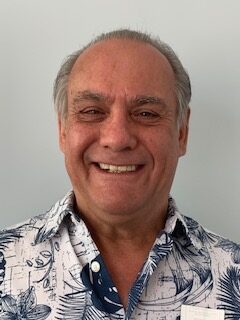
Craig
I’ve had three brain injuries.
At the time of my first traumatic brain injury (TBI), I was on the fire department and training for a power engineer. But because of my mental and physical injurie I was not able to purse these careers anymore. I tried going to college but I wasn’t able to keep up. I didn’t know why. My first TBI was when a drunk driver hit me head on, on the highway, with his 3-ton work truck. My jaw was broken, and six inches in my femur was fracture. My biggest bone was now the size of a toothpick. They had never saved a leg this badly damaged. My wife had to sign amputation papers. As an experiment they put me in traction for 3 months. They couldn’t do anything else. During the three months, it did heal itself but I was told I would never be able to walk again without some kind of aid. A couple of years later I was walking on my own. At the time of my injury, they never checked if I had brain injury. I had to learn to read and write again but I was too embarrassed to tell anyone. It seemed I wasn’t able to remember things on a daily basis. I also found it hard to control my emotions. I felt like I was going crazy.
I had my second brain injury 7 years later when I was helping my father-in-law move a camper off his truck. One of the jack legs gave out and the corner of the camper fell down and hit me on the top of my head. I was in a wheelchair for 5 years. I was told I would never walk again, but I did. Again, they did not check to see if I had a brain injury. The injury affected my emotions and thinking processes even more. My wife got me to grow a beard to help remind her I was different and to not put the sane expectations on me, which helped my confidence. I also put a picture on my mirror as a child. If I tried to degrade myself, I would ask myself of if I would speak to that child in the same manner?
Twelve years after my first brain injury, I was finally diagnosed with brain injury. I was an in- patient at the Ponoka Brain injury centre in Alberta for 12 months. They had only accepted patients where the brain injury had happened within the previous 2 years. So, it was an experiment to see if I could improve. They helped me tremendously and the were surprised that I was able to improve so much.
My third brain injury was from mu head being kicked around with steel toe boots from a home invasion. Three of the five men were charged with attacking my youngest son and me. I wasn’t able to identify the other two as they had torn layers off my left eye. They had broke my arm in two places, 4 of my ribs were cracked and they had kicked out my front teeth. I was a wreck. But the thing I did have control over was my attitude, keeping it positive got me through these challenges. I remembered how I had helped other patients in the previous hospital stays and it really helped.
Still there were challenges with what we know as “invisible injuries” of brain injury. O get away from the comparisons between the od me and the new me, we moved to a different province. Here they accept me as I am now. This immediately helped my confidence.
I have a full life. I volunteer at the Nanaimo Brain Injury Society supporting other individuals who have acquired a traumatic brain injury. My roles include being on the board, facilitating educational workshops, providing peer support, helping with fund raising activities, and assisting the organization where I can. It’s nice being part of a community where I don’t have to explain anything because they understand what it’s like having a brain injury. For me, peer support helps a person not feel so alone in their recovery.
Kevin
April 7, 2023 was the most pivotal part of my journey through life with my partner Dayae. In broad daylight we were unpacking our rental car in San Diego on the 1st day of our vacation, when we got hit by a car and everything suddenly shifted.
My name is Kevin and I am beyond grateful to be alive & living a full life with Dayae, who I now call my wife.
I suffered a severe traumatic brain injury with a number of muscular skeletal injuries and was immediately taken to the San Diego ICU. The doctors performed a craniotomy surgery to reduce my brain swelling & bleeding. I spent the next week in a coma and on a ventilator, where I eventually awoke and regained life in this world. My first words were the love of my life, Dayae’s name. She suffered significant physical injuries, while navigating emotions after seeing her loved one almost die.
From there forward the recovery journey was in motion. Having to relearn everything from eating, speaking, reading, writing, walking. It was like an accelerated childhood.
Having family, friends and faith was essential to the miraculous recovery we made and still are the most impactful pieces.
As this accident shook every connection we have, the outpouring of love from family and friends was beyond words.
No one knew how far our recovery would go, but having faith, a belief in the unknown, was paramount.
Everyone in life has challenges. That is undeniable. The challenges I’ve had to get through and still continue to experience are significant, ranging from simple & predictable to complex & unexplainable. Memory, processing speed, emotions and physical limitations all have been intertwined to successfully navigate daily living.
For the first 6 weeks after the accident, my brain was in full recovery mode, which meant I wasn’t able to form or remember new things during that period. I also can’t recall events from the weeks to months leading up to the accident. I love analogies, and the best way I can describe it is being in a pitch-black room where, very slowly, thin slivers of light begin to break through. Each sliver was a memory I could finally hold onto, and over time, more and more light found its way in.
A few months after the accident, as that light continued to grow, my support team helped me find my way around the hospitals (VGH and GF Strong), organize my schedule and calendar, and plan meals — including grocery shopping and transportation. The list goes on, but I’m beyond blessed for the support team that walks alongside me through every part of life.
To summarize the learnings & tools I acquired along my recovery, and am still using today, all of them seem to begin with the letter “P”.
Patience: Having this with yourself is critical and the most overarching word of the next few I’ll share.
Presence: Enjoy the present moment, including all the little details as there is no guarantee how long it will last.
Perspective: I wrote earlier that everyone in life has challenges and having this viewpoint realigns your view on life.
Progress > Perfection: Learning is the #1 tool for brain recovery as it strengthens & builds new neural connections, but having the mindset that progress is more important than perfection is key.
Perseverance: No matter what you are told, having resilience and drive allows you to reach your dreams.
I wanted to share the above “P’s,” which have been individual mindset tools that guide my journey — and if you’re a support team member (family, friend, practitioner), please share them too.
As it’s taken me several months to write this and reflect on my journey, writing this has given me Peace (another P word) to reflect and ultimately share my story with you all. But before I close (and hopefully you’re still reading), the missing component to this story — the one that provided me the opportunity to share — is Peer Support.
I truly believe that being able to connect with other individuals (independently or in a group setting) who have acquired brain injuries, is the most connecting and valuable piece of your recovery journey.
Aneurysm
Steve
Trigger warning: suicide
In July of 2016, I thought I was doing okay. I found happiness after years of struggling in previous relationships and career dissatisfaction. I found a great job as a consultant employed with a company that built systems for the government. In my personal life, I had met the love of my life and after a whirlwind romance we got married in 2015. We don’t have any children and we talked about the days that we would retire together… In the meantime, we started traveling the world together.
I also have a history of head injuries. When I was in Grade 1, I lived in a small town outside of Ottawa. I was close to my school with friends as we were heading home. I don’t remember much, but I ended up at CHEO in Ottawa. I was unable to walk and unable to remember what happened. It turns out we were hit by a car. I had many injuries including a fractured skull. I was able to recover and left the hospital. Physically I was fine… mentally, I was a mess. Back then (1980), my mental health wasn’t addressed.
From then on, I always had trouble in school. I was always confused and frustrated. It took me extra time to do things. But I managed to piece things together and got a diploma from a community college. After getting lucky a few times, I became an expert in a technology that led to a solid career.
Around 2012, I took a leave of absence from work. I was overwhelmed, depressed and my work-life balance became very unbalanced. I sought help for depression and tried to make life changes before returning to work. I learned about post-concussion syndrome and learned that I was dealing with symptoms all of my life without being aware that I was dealing with symptoms. It took me a few months to figure stuff out (new medications, new habits for reading/writing) and return to work.
Then in the summer of 2016, it happened. I felt a sensation in the back of my head. I went to the bathroom to vomit. I had a headache and felt disoriented. I broke out into a dizzy sweat and decided to lay down on the floor near my running fan at my desk. I vomited in the garbage beside me again. A colleague came over to see what was up and he called 911 right away. He thought it was odd that I was joking with him one minute and unconscious the next. Yikes.
Had it happened at night or in another situation, I very easily could have died. Luckily, I had paramedics at my office within 8 minutes. I was taken by ambulance to the Civic Hospital in Ottawa, ON, Canada. My brain was bleeding. I was having a Subarachnoid Hemorrhage. I needed medical attention immediately…. Things were not looking good.
I had an operation the next day. In order to stop the brain bleed, a medical coil was installed at the site of the aneurysm. This caused a stroke.
After the surgery, I was in rough shape. I was unable to walk, had aphasia and had a hard time being awake.
Conversations were being had about my chances of survival and if I survived, what was my
quality of life going to be. At that time, I couldn’t walk, I wasn’t eating, I was hooked up to a variety of machines and I was more concerned about escaping the hospital in a helicopter, stuffed thumbs in mugs and getting deep fried ice cream from the mobile vendor who was apparently right beside me.
As time progressed, I was making enough improvements that I was moved to a Stroke Recovery Unit. As a 41-year-old, I spent time recovering with 65- to 85-year-olds. Although the care I received was top notch, I couldn’t relate to anyone and felt very much alone.
Again, I left the hospital physically fine but mentally very messy. I was having a variety of different issues. My biggest complaint was the constant thoughts I was having about death and suicide. I knew I didn’t want to kill myself, but I couldn’t walk by a rope, wire, knife, tall building, literally everything and anything without the thought of a tool to kill myself.
I sought help from many different doctors and a psychiatrist I met was very helpful. He told me I was Chronically Depressed. He set me up with medication. At the time we talked about living with Schizophrenia. I was getting medication for it and managing symptoms. We started talking about a path to recovery.
Along that path, I met a few psychologists that weren’t very helpful. When I spoke in my broken way, I couldn’t say the right things at the right time and often I found myself leaving appointments in a worse situation.
When I discovered a support group for people who suffered brain injuries, I was eager to meet everyone. At my first meeting, I felt like I had found my people. I could relate to everything the people in the group said. From that group, I have joined 2 other groups and even created my own with 3 friends who I’ve become very close to. I’ve traveled with one friend and my phone is constantly buzzing because I communicate with them over WhatsApp/Signal/Facebook.
Over the next 4 years, my talks with the psychiatrist stopped being about Schizophrenia and more about how proud he was of me that I faced my issues, found support and found happiness within my restrictions.
In the meantime, recovery is my full-time job. Returning to work is no longer an option. I’ve gone through a career mourning of sorts and it took a while, but I am officially retired. Yay!
My wife has been a rock for me and she has been supportive and understanding throughout this ordeal. I can’t thank her enough for being by my side. She also attended a group for spouses of brain injured people and learned a great deal of information from other spouses/caregivers/supporters.
Nowadays things are pretty good. In 2021, my wife accepted a job in Qualicum Beach. Partly for me to retire and partly for her to lead a different life outside of the city with more work life balance.
I had the blessing of all my doctors when I left and I’ve assembled the help I need on the Island.
I do still have issues though….
- I have a constant headache. It’s a pressure headache and a ringing. It’s been the same since I was discharged from the hospital. Drugs don’t help, alternative medicine is not an alternative, surgery is really the only way to fix the problem, but it would be invasive and life threatening.
- I have balance issues. I cannot walk or stand up straight without a point of reference. If I am not concentrating or looking around, I will literally fall to the right. If I am in a dark room or if I close my eyes, I will fall to the right.
- I have memory issues. If I’m talking about something, I will very often lose my point. If I’m listing off something, by the time I get to the 3rd item, I’ve forgotten what the first item I said was. When I’m speaking, if there is any sort of distraction, I cannot pick up where I left off, I’m not able to remember what I was talking about and more specifically, where I was… I need a reminder to continue talking. This is pretty rough.
- My concentration is also horrible; I have trouble focusing on things especially when I’m listening. I have trouble processing what information is coming at me. I often plainly miss information.
- My mental health is mental. Depression/mood issues really stink. There are many symptoms that I have experienced so I have lots of help with this. I am a member of 3 support groups; I have seen a neuropsychologist for 1 on 1 counseling. I’m seeing a psychiatrist, and with his help, I have found a wonderful cocktail of drugs that work for me. I have plenty of plans in place should I need help… I’ve done all the things I need to do, but I can’t shake negative thought cycling, the perseveration, the rumination, the frustration, and the overall feeling of hopelessness and sadness.
- Post stroke fatigue is a thing. I generally need an afternoon nap, otherwise I can’t make it into the evening. There are times when I can feel like my old self for stretches, but I need rest and recovery time after that (sometimes weeks). My sleeping habits are really good or really bad depending on who you ask… I get about 7 to 10 hours a day, but I usually only sleep for 6 hours at a time.
- Urinary issues… Ugh, this one sucks, but the time between the moment when I realize I need to go to the bathroom and the moment I am actually going to the bathroom is very short. I’ve found myself in odd and embarrassing situations. I know where every public bathroom is in the city. I have to be strategic with my liquid intake, haha.
- I’ve been having trouble with addiction and have addiction/dependency issues. I’ve quit drinking. I’ve questioned my prescription drug intake, my caffeine use, pot use, eating habits and everything else I do on a regular basis. I feel compelled to do certain things, in a certain way and it raises many, many questions…
I’ve made the following life changes:
- I’ve become a volunteer with the Nanaimo Brian Injury Society. I take part in a variety of things but my time visiting people in the hospital has been amazing. I’m able to tell people my story, relate to them easily and encourage them that recovery is possible. I encourage patients to not make the same mistakes I did and I often go into detail about those mistakes.
- I follow a gluten free Mediterranean diet (some dairy).
- The addition of our first dog to the family has given me something to worry about (other than myself) and has helped socially and emotionally. She has been the source of other issues, but overall, she has been amazing! My wife and I recently adopted a second dog who has brought new energy and challenges.
- I’m physically active… I walk/hike with my dogs daily and we always have weekend adventures with my wife.
- I’ve seen a psychologist for depression help and she’s a person I can reach out to in a crisis, should one arise.
- Meditation and deep breathing techniques that I have learned have been very helpful, both in moments of stress, as well as getting to sleep.
- I quit drinking alcohol. I don’t take pain meds or anything to manage pain…
- I get as much sleep as I can.
- Despite my balance issues, I’m a yoga junky now. I practice at least 5 times a week, sometimes 8 in a studio. The deep breathing, the moving meditation, the physical conditioning, hearing words of affirmation and listening/following instructions have benefited my overall well being. I’m happy to be part of a community that is completely separate from the brain injury community. The owner of the studio and a couple of the instructors know, but other than that, I fit in with everyone else.
- I’ve accepted the fact that I have an invisible disability and I’ve learned to live within its confines. No, I don’t use a handicapped placard, but I do have one. 🙂
- Moreso to the point above, I’ve accepted that my brain has literally broken and the damage is permanent.
- I’ve mourned the loss of my career and my life as it was, I think I’ve gotten over it… Or maybe not.
- I’m officially a pensioner, so thank you for your CPP contributions and get off my lawn!!
So, all in all, I’m doing fine…. Except I’m not…. But overall fine!
Arterial Venus Malformation (AVM) & Radiation Necrosis
Angel
My name is Angel, I acquired my brain injury in 2012 because of an AVM (arterial Venus malformation) and radiation necrosis throughout the years. In 2011, I had a small brain bleed (0.4mm) and my whole right side was numb – at that time I was 16 years old. Luckily, the numbness quickly die down, and I returned to high school. The next couple of months, when I was 17 years old, I underwent stereotactic radiosurgery to treat my AVM. Three months later (2012), when I was entering my senior year of high school, I started experiencing brain fog, difficulty walking, seizures, and I was admitted to VGH hospital. After thorough investigation, I was then diagnosed with post radiation demyelination, and I was sent to GF strong as an impatient for physiotherapy, speech therapy, and occupational therapy.
I recovered very fast, perhaps it was because I was young. I was able to walk again and my aphasia improved drastically. However, I had the flu in 2013, and I never quite recovered from there, from there on, I have right hemiparalysis and increased seizures. I attended college part-time, and received my diploma in social services – 2019. Throughout my college years, in 2017, the doctors told me I had radiation necrosis (dead brain tissue from radiation in 2012) and I had my first craniotomy. It was quite scary for me because at that time, I really wanted to finish my schooling. After my first brain surgery (when I was 21 years old), I then was admitted to GF strong as an impatient for a second time.
After graduation and joining the workforce, I then received the news that I needed another craniotomy/brain surgery because my MRI showed radiation necrosis once again – this was in 2022. However, this time, it was deemed stable/not urgent. I eventually decided to go forth with the brain surgery in late 2024 (when I was 29 years old). After surgery, I was admitted to GF strong for a third time receiving physiotherapy, occupational therapy, and speech therapy.
Now that I am 30, I have a new perspective in life. Try to cherish every day and spend lots of time with friends and family because nothing is given. I met a lot of friends through GF strong that experienced similar conditions as I did – and we bonded through that. We still keep in touch and occasionally go out for a meal. I strongly believe in a community that helps each other strive for a better life.